Review, prioritize, and complete tasks
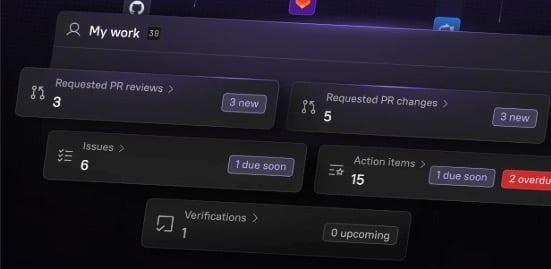
Prioritize and complete work from the homepage
Prioritize and complete work from the homepage

- Active work: See your open PRs, PRs assigned for review, active Jira tickets, and action items from Scorecards and Initiatives, ensuring you are aware of your responsibilities and can quickly address migration-related tasks.
- On-call status: See current and upcoming on-call shifts, helping you stay prepared for incident response.
- Scorecards and Initiatives: See real-time progress toward migration and modernization standards and initiatives.
- Shortcuts: Use direct links to quickly access your owned entities.
Act on failing Scorecard rules
Act on failing Scorecard rules
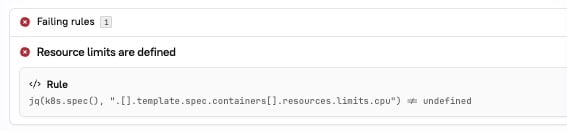
Review failing rules
When a Scorecard rule is failing, this information is surfaced to you in multiple ways:- Scorecard rules that require your attention appear on the Engineering homepage.
- You can receive notifications via Slack, Microsoft Teams, or email when a Scorecard rule is failing.
- Learn more in the Notifications docs.
- You can review a Scorecard’s progress in reports or by viewing the Scorecard in Cortex.
Remediate failing rules
When a service falls short of standards, there are different ways you can approach remediation:- Use Cortex MCP to get suggestions for remediations. Ask a question such as What are some quick wins for my Migration Scorecard? and the MCP will respond with a prioritized list for you to focus on during remediation efforts.
- Set up an Initiative to assign and track remediation tasks. For example, you might create an Initiative that asks teams to reach compliance within the next month. In other words, they would need to ensure that their owned entities have achieved all rules on your migration Scorecard.
- You can also automatically create issues in Jira, ClickUp, Azure DevOps, and GitHub based on Initiatives. Learn more in Creating issues based on Initiatives.
- Identify and troubleshoot trends in Scorecards, and consider scalable remediation efforts. Learn more in Review and evaluate Scorecards.
Analyze trends in Eng Intelligence and reports
Eng Intelligence
Eng Intelligence allows you to view organization-wide and historical data, making it easy for leaders to validate the impact of readiness programs and for teams to see their progress toward readiness goals.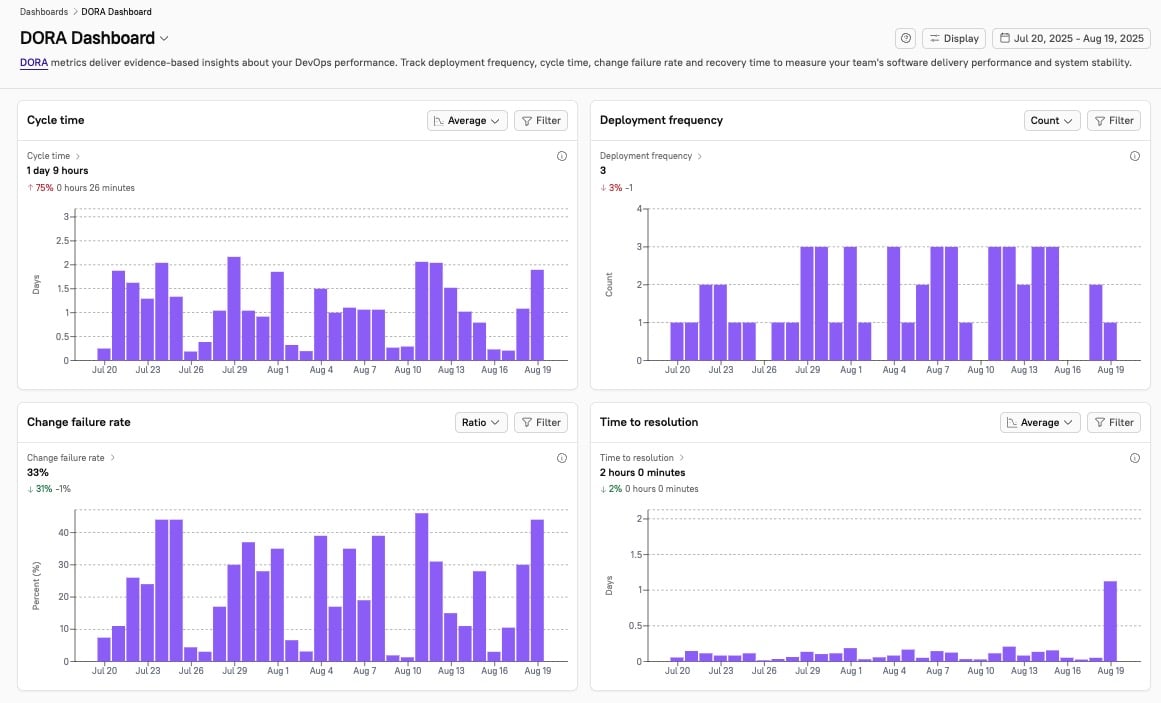
- Establish a baseline: Before the migration, monitor metrics to understand your organization’s baseline.
- See impact: During a migration, monitor the metrics to understand trends, validate improvements, or identify regressions. Launch a Scorecard or Initiative for the migration and watch as metrics like MTTR, cycle time, or deployment frequency shift in real time.
- For example, you can see how migration adoption (e.g., moving to a new cloud platform) impacts metrics. You might notice that as more services become compliant, MTTR drops, giving you data-driven validation of your migration’s success.
- Drive action: If you identify a regression after a migration, or you notice some services are slower to meet migration requirements, you can create a targeted Initiative to fix it.
- Initiatives send notifications to users asking them to complete tasks by the deadline you configured. Learn more in Initiatives and action items.
Reports
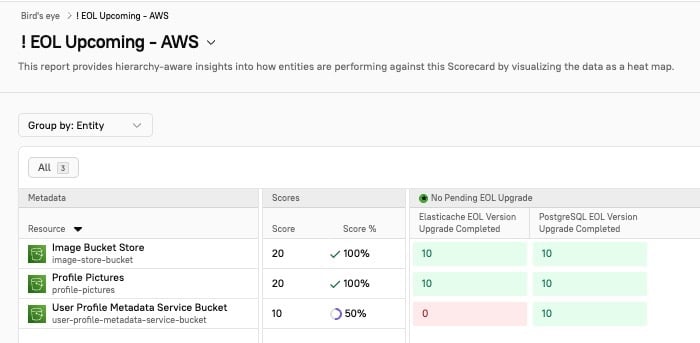
Use reports in Cortex to track migration progress and drill down by team or service.-
Use the Bird’s Eye report to visualize entity scores as a heat map for your migration Scorecard, giving you a high level overview of progress.